
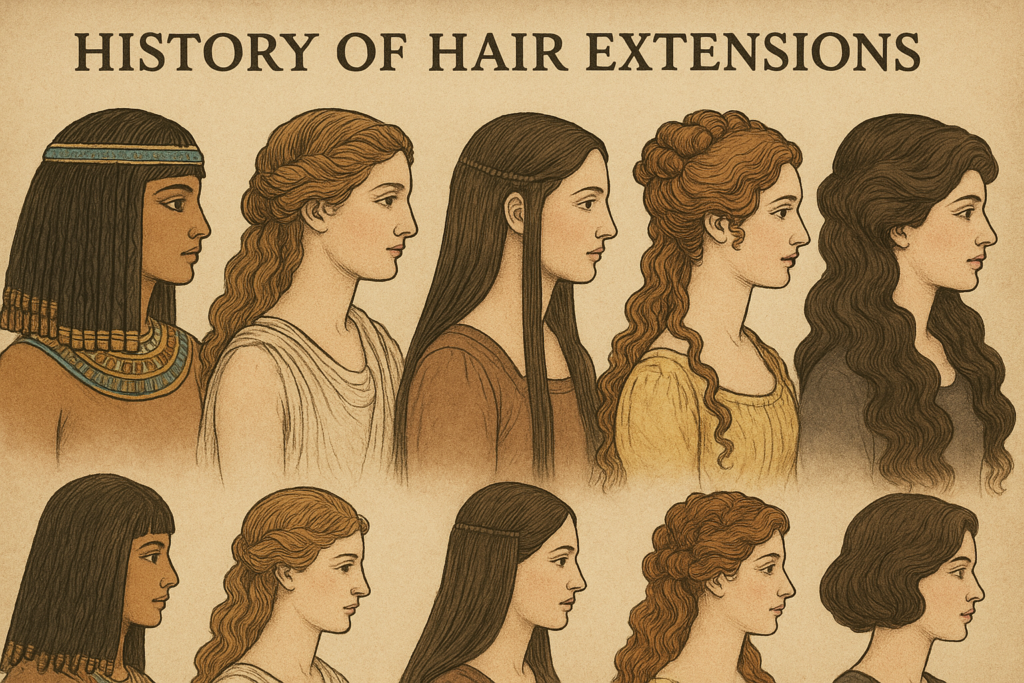
Hair extensions may feel like a modern beauty trend, but the history of hair extensions actually spans thousands of years. From ancient civilizations to today’s hyper-customized beauty market, extensions have evolved in materials, purpose, and cultural meaning. And while salons once dominated the extension world, one invention completely changed accessibility and convenience: clip-in extensions.
This article breaks down the historical roots of hair extensions, how the technology evolved, and why clip-ins became one of the most revolutionary upgrades in modern beauty.
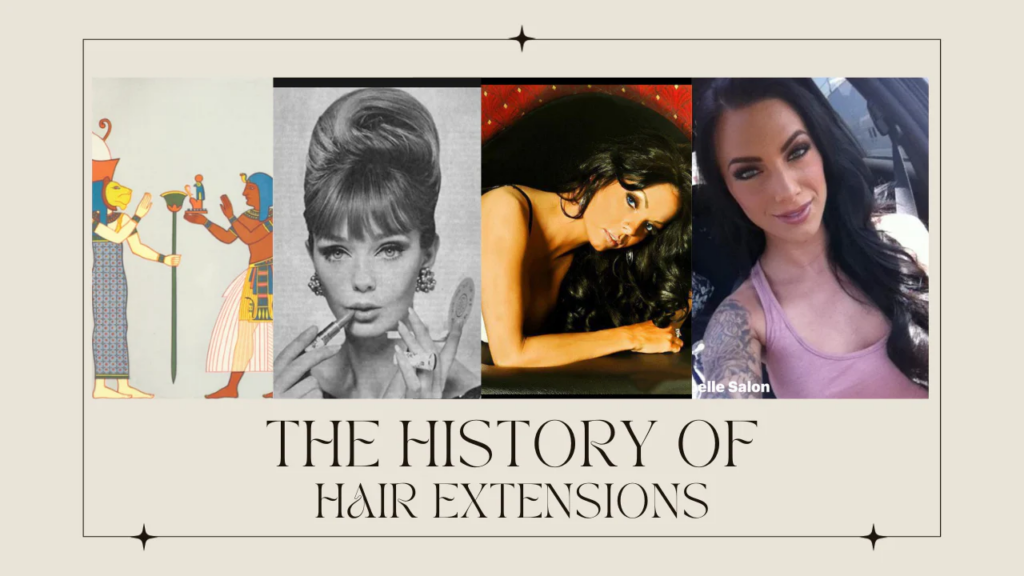
Ancient Beginnings: Extensions as a Sign of Status
The story begins in Ancient Egypt, one of the first civilizations to record the use of hair adornments. Egyptians wore braided wigs and extensions made of human hair, dyed fibers, and even sheep’s wool. These pieces weren’t simply cosmetic they symbolized wealth, rank, and hygiene. Elite Egyptians often layered long strands to project power and sophistication.
Moving to Ancient Rome and Greece, hairpieces became an everyday luxury. Wealthy Roman women used blonde or red hair sourced from conquered territories to emulate fashionable trends. Greeks favored intricate braided styles, supported by extra hair to create fullness and structure.
Across these early cultures, one theme stands out: extensions were not about hiding flaws, but about enhancing beauty and identity.
The Renaissance to Victorian Era: Hair as High Art
By the Renaissance, elaborate hairstyling became a mark of artistry. Women used wire frames, padding, and false hair to create towering, sculptural looks. European courts embraced extensions to achieve impressive volume and intricate curls.
The Victorian era took a softer approach. Hairpieces became sentimental keepsakes made from loved ones’ hair were woven into adornments. At the same time, hairpieces became mainstream thanks to the growing availability of human hair, often sourced from the working class.
Still, hair extensions were primarily available to those with means, and the process remained labor-intensive.
20th Century Innovations: From Hollywood Glam to Everyday Wear
The 1900s brought dramatic shifts in beauty standards and technology. In the 1920s, short bobs came into fashion, but women used small wefts to shape fuller silhouettes. By the 1950s and 60s, Hollywood icons like Elizabeth Taylor and Brigitte Bardot popularized voluminous hair, pushing manufacturers to produce wigs and hairpieces at scale.
The biggest transformation came during the 1980s–2000s with techniques such as:
- Fusion bonding
- Sew-in weaves
- Tape-ins
- Microlinks
These methods created more natural looks but required professional installation. They could also be expensive, time-consuming, and uncomfortable for some users.
Despite improvements, the extension industry had a clear barrier: the average person couldn’t easily take extensions on and off whenever they pleased.
Then clip-ins arrive and everything shifted.
How Clip-In Extensions Changed the Game
Clip-in extensions introduced something the hair world desperately needed: freedom. Instead of requiring heat, glue, or hours in a salon chair, clip-ins offered a beginner-friendly, DIY approach.
Here’s what made clip-ins revolutionary:
1. Instant Transformation Without Commitment
Clip-ins let users switch from shoulder-length to waist-length hair in minutes. They opened the door for experimentation, from special-event styling to daily wear.
2. No Damage, No Stress
Traditional extensions often put tension on natural hair. Clip-ins removed that risk, making it easier for people with fine or fragile strands to enjoy fuller styles.
3. Budget-Friendly and Accessible
Instead of paying for monthly salon visits, users could invest in one set of clip-ins and reuse them for years. This made high-quality hair more attainable globally.
4. A Gateway to Creative Beauty
Clip-ins allowed beauty enthusiasts and hairstylists to experiment with color, volume, and texture without altering natural hair. From fashion shows to TikTok tutorials, clip-ins became a tool for self-expression rather than a long-term commitment.
5. The Rise of At-Home Beauty Culture
With the growth of social media and e-commerce, clip-ins found the perfect environment to flourish. Tutorials, before-and-after videos, and influencer reviews helped clip-ins go mainstream quickly.
In short, clip-ins democratized hair extensions, they moved extensions from luxury salons to everyday bedrooms.
Why the History of Hair Extensions Still Matters Today
Understanding the history of hair extensions reveals something deeper: the way we style our hair says a lot about who we are. Extensions have always been tied to identity, confidence, culture, and personal expression.
And because clip-ins offer versatility and control, they reflect modern beauty values:
flexibility, individuality, and empowerment.
Clip-in technology continues to evolve. Modern versions offer:
- lightweight, seamless wefts
- hyper-realistic textures for every hair type
- long-lasting human hair options
- color blends that mimic real growth patterns
Clip-ins aren’t just a trend they’re the result of centuries of beauty innovation.
Final Thoughts
From ancient royalty to modern creators, hair extensions have always been a tool for storytelling and clip-ins made that story available to everyone. As the beauty world continues to evolve, clip-ins stand as one of the most influential innovations, combining history, technology, and personal expression in a single, accessible product.
If you’re exploring the history of hair extensions or seeking the easiest way to transform your look, understanding this evolution helps you appreciate how far beauty has come and how clip-ins continue to shape the future.